
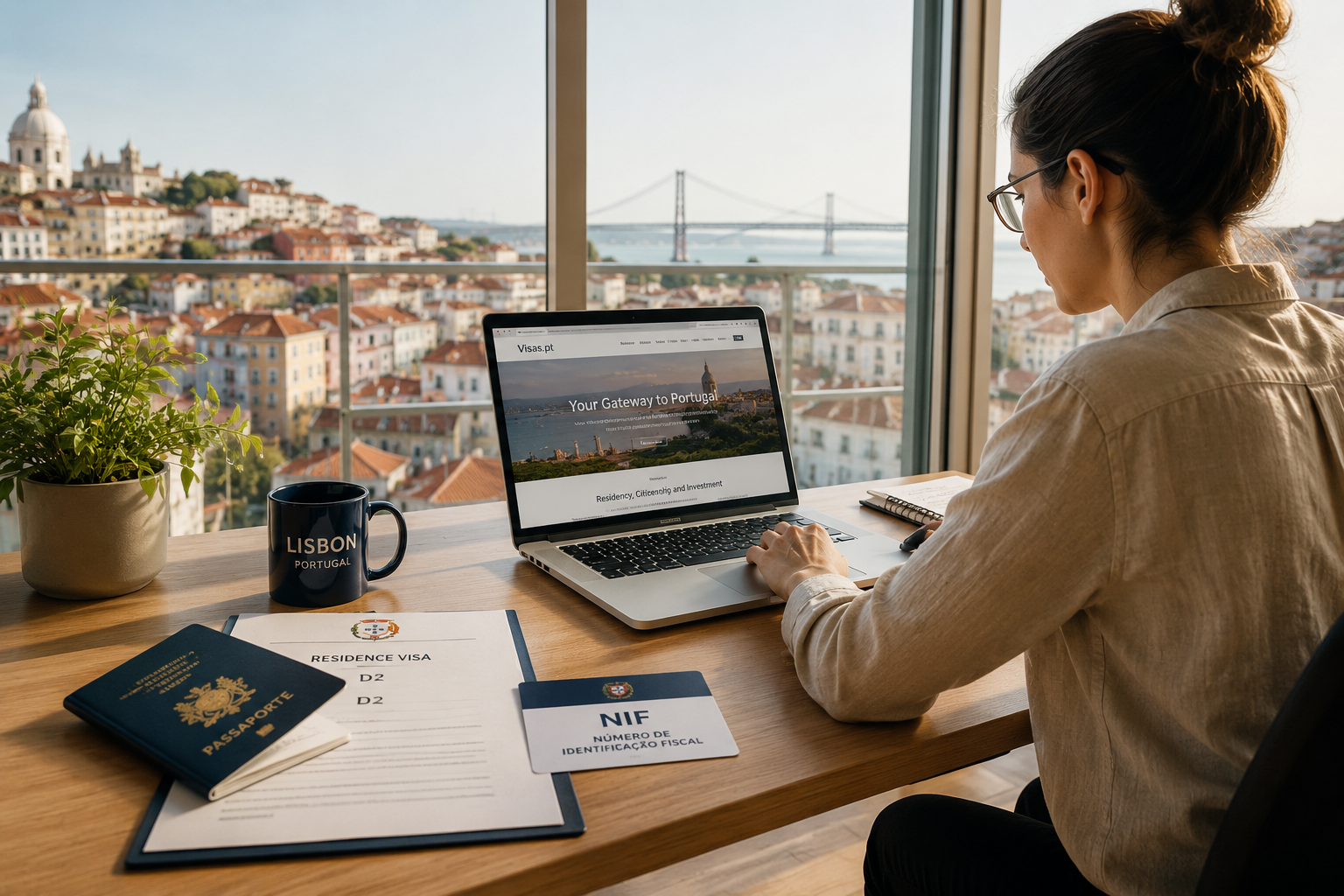
This is understandable. With AIMA appointment delays sometimes extending for several months, many applicants worry that they must wait until they receive their residence card before they can work, invoice clients, or earn an income.
For these visa categories, however, waiting for the residence card does not generally mean that all professional activity must be put on hold. The key considerations are the purpose of the visa, its validity, and compliance with the requirements applicable to the activity.
Can You Start Working After Arriving in Portugal?
Generally speaking, yes—provided you hold a valid visa appropriate to the activity you intend to carry out and have completed any necessary employment, tax, or business formalities.
For example:
-
D1 Work Visa: Holders can generally begin working for their Portuguese employer, subject to the applicable employment and registration requirements.
-
D2 Entrepreneur Visa: Holders can generally begin pursuing their business or self-employed activity, provided the necessary registrations and any required licences are in place.
-
D8 Digital Nomad Visa: Holders can generally continue working remotely for employers or clients based outside Portugal, in accordance with the purpose of their visa.
The important distinction is that lawful entry alone does not authorise every type of work. Your professional activity should be consistent with the visa you hold.
Other residence visa categories may have different conditions, so the same conclusion should not automatically be applied to every applicant.
Why Does This Confusion Exist?
Many people confuse the residence visa with the residence permit.
These are two separate stages of the immigration process:
-
The residence visa is issued through the Portuguese consular authorities abroad and allows the holder to enter Portugal to apply for residence.
-
The residence permit is granted by AIMA after the relevant application and checks. The residence card serves as evidence of that status.
For visas issued specifically for employment, self-employment, entrepreneurship, or remote work, the absence of a residence card does not, by itself, mean that the intended activity cannot begin.
However, holders must still complete the residence application process and continue meeting the conditions associated with their visa.
Practical Requirements Before You Start
Even where your visa allows the intended activity, there are administrative steps to consider.
Employers may request:
-
A Portuguese Tax Identification Number (NIF)
-
A Portuguese Social Security Identification Number (NISS), where applicable
-
A valid passport and residence visa
-
Proof of address
-
The documentation required to formalise the employment relationship
For this reason, obtaining a NIF as early as possible can help simplify hiring and other administrative procedures.
If you intend to work as a freelancer or run a business, you may also need to register your activity with the Portuguese Tax Authority, establish the appropriate business structure, and meet any applicable invoicing, licensing, or professional registration requirements.
Having permission to carry out an activity and being administratively ready to carry it out are separate matters. Both should be addressed before you begin.
Does Remote Work Create Obligations in Portugal?
Working for a foreign employer or invoicing foreign clients does not necessarily remove your obligations in Portugal.
Depending on your circumstances, living and working in Portugal may create Portuguese tax, social security, or employer compliance obligations. These should be assessed separately from your immigration status.
For D8 holders in particular, it is sensible to review these arrangements before relocating or shortly after arrival.
What If Your Residence Visa Expires Before Your AIMA Appointment?
This is another common concern, particularly when an appointment takes longer than expected.
If your visa is approaching its expiry date and your residence application has not yet been completed, you should check which procedure applies to your situation and whether an extension of stay or other formal action is required.
Do not assume that an appointment confirmation, an appointment request, or correspondence with AIMA automatically extends your visa or independently establishes a continuing right to work.
The position may depend on the documents you hold, the stage of your application, and the legislation in force at the time. Rules for renewing an existing residence permit should also not be confused with those governing a first residence application.
Where there is uncertainty, seek clarification from AIMA or obtain legal advice before relying on an expired visa as evidence of your status.
Keep Evidence of Your Immigration Process
While waiting for AIMA, keep organised copies of:
-
Your passport and residence visa
-
Evidence of your lawful entry into Portugal
-
Your AIMA appointment confirmation
-
Any application receipts or proof of submission
-
Any request for an extension of stay and the corresponding decision
-
Relevant correspondence with AIMA
These documents can help explain the status of your application to employers, banks, and other institutions. However, supporting correspondence should not be treated as a substitute for any formal extension or authorisation required in your circumstances.
Final Thoughts
For many people arriving in Portugal on a valid D1, D2, or D8 residence visa, it is generally possible to begin or continue the professional activity for which the visa was granted before receiving the residence card.
The essential steps are to ensure that your activity matches your visa category, complete the relevant employment or business formalities, and monitor your immigration deadlines carefully.
If you are planning to move to Portugal and would like assistance with your visa application, the team at Visas.pt would be happy to help you understand the requirements and prepare for the next steps.